Key Performance Indicator
KPI (Key Performance Indicator) is a measurable value used to evaluate how effectively an employee, team, or organization achieves its predefined objectives and targets.
In Sentec EMS, KPIs are used to monitor and assess employee performance based on specific goals, performance metrics, and target achievements established by the organization. Each KPI can be assigned a target value, measurement method, and weight, allowing organizations to objectively track progress and calculate performance scores.
By utilizing KPIs, organizations can:
- Align employee performance with business objectives.
- Measure progress toward strategic goals.
- Identify strengths and areas for improvement.
- Support fair and data-driven performance evaluations.
- Enhance accountability and continuous performance improvement.
The final KPI score is calculated based on the employee's actual achievement compared to the defined target, according to the organization's performance evaluation rules.
KPI Template
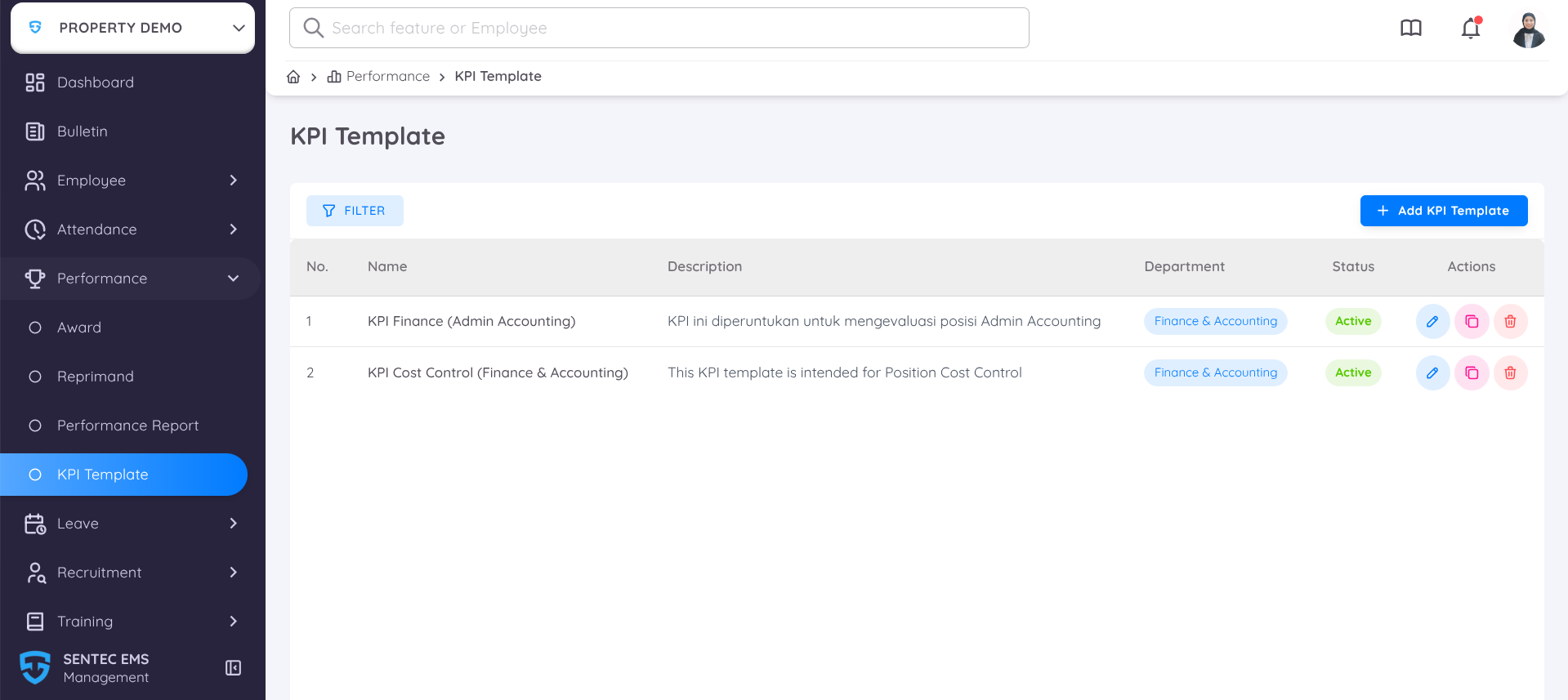
If KPI is used as part of the performance evaluation process, management must first create and configure a KPI Template for employees.
KPI Templates can be designed based on positions, job roles, or specific job responsibilities, ensuring that employees are evaluated according to the expectations and objectives of their respective roles.
KPIs are organized into groups, where each group represents a specific evaluation category, such as:
- Productivity
- Quality
- Teamwork
- Customer Service
- Compliance
- Or other Categories
Individual KPIs are then assigned under the appropriate group to create a structured and comprehensive performance evaluation framework.
KPI Weight Structure
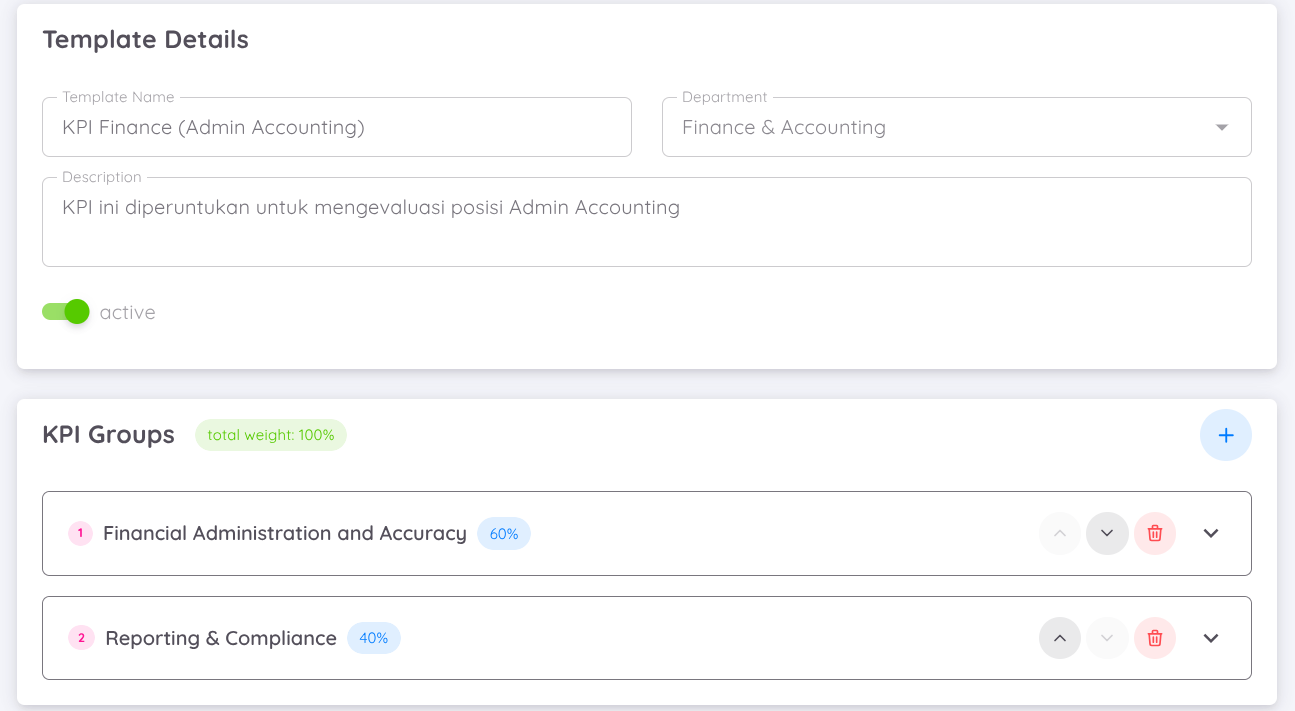
To ensure a balanced and accurate assessment, both KPI groups and individual KPIs can be assigned a weight that reflects their relative importance.
The following rules apply:
- Each KPI group may have its own weight.
- Individual KPIs within a group may also be assigned weights.
- The total accumulation of all applicable weights group must equal 100%.
- Weight distribution should reflect the organization's performance priorities and evaluation criteria.
This weighted structure allows organizations to emphasize the most critical performance areas while maintaining a fair and objective evaluation process.
Create KPI Template
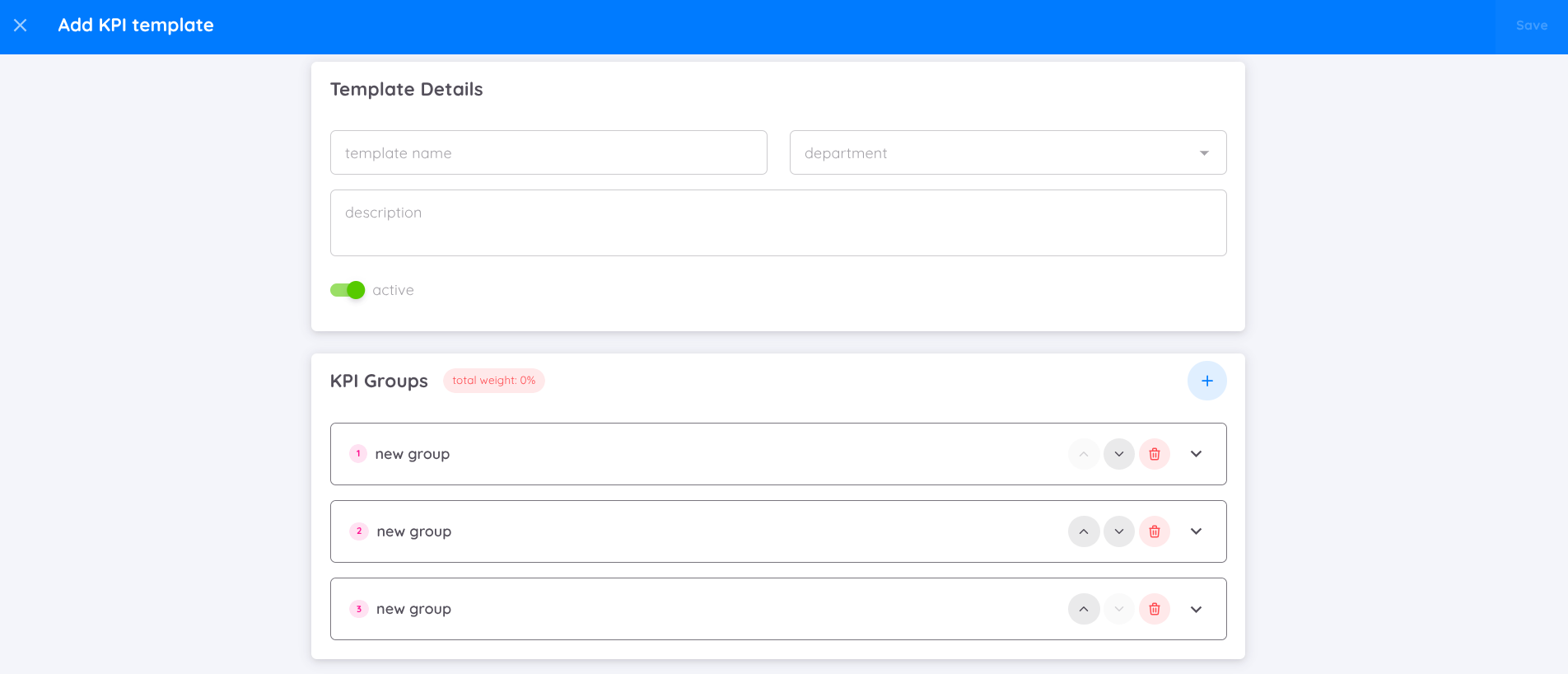
To create a KPI Template, navigate to:
Performance Menu → KPI Template
The KPI Template is used as the foundation for defining how employee performance will be evaluated within the organization. It ensures that all employees are assessed using a consistent and structured approach based on their role and responsibilities.
General Template Setup
When creating a new KPI Template, the following fields must be defined:
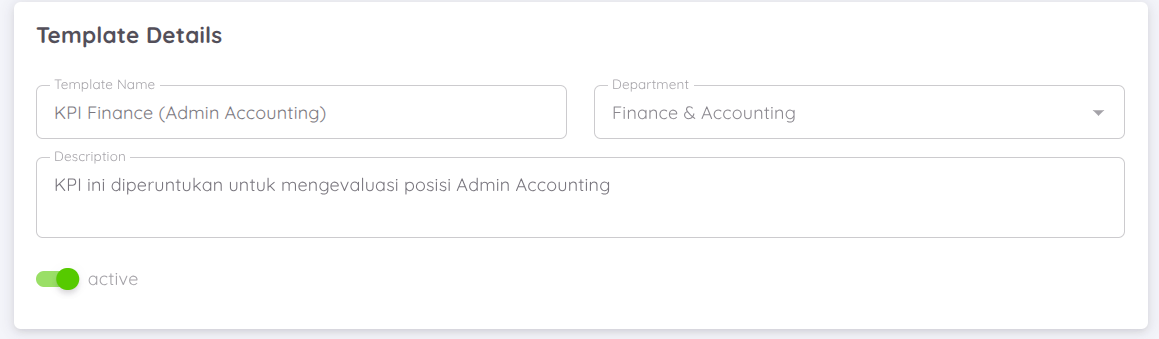
Template Name
The name of the KPI template. It should clearly represent the purpose or scope of the evaluation (e.g., “KPI Admin Accounting”).Department
Specifies the department where this KPI template will be applied. This ensures that KPIs are relevant to the functional area being evaluated.Description
A brief explanation of the template, including its purpose, scope, or any special evaluation rules.
KPI Group Configuration
KPIs are structured into groups to organize evaluation categories in a more structured and meaningful way.
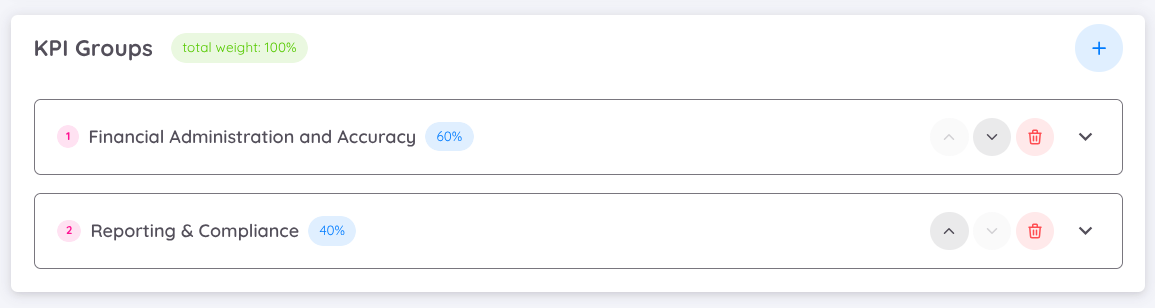
Each group represents a major evaluation category such as:
- Productivity
- Quality of Work
- Teamwork & Collaboration
- Attendance & Discipline
- Customer Satisfaction
- And Other Categories
Group Setup
When creating a KPI Group, the following configurations are required:
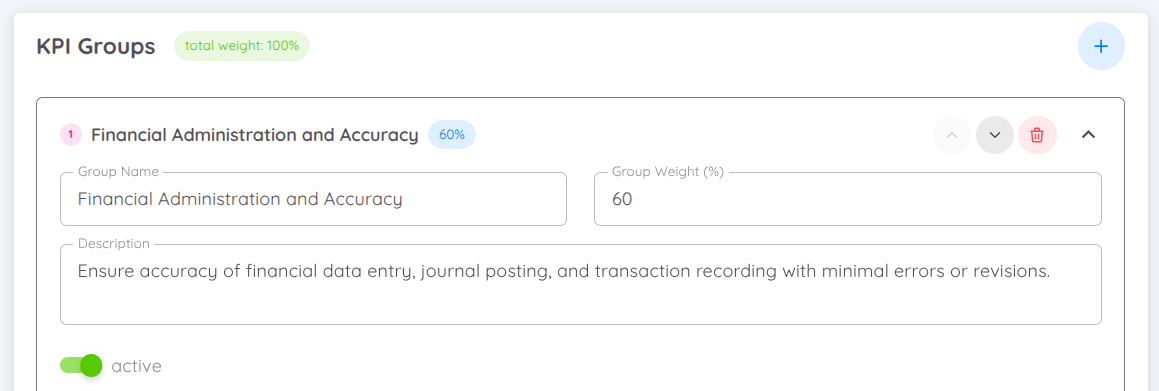
Group Name
The title of the evaluation category (e.g., “Productivity”, “Work Quality”).Weight (Bobot)
Each group must be assigned a weight to define its importance in the overall KPI calculation.⚠️ Important Rule:
The total weight of all KPI groups within a template must equal 100%.
Description
This field can be used to provide additional context about what the group evaluates and how it contributes to performance measurement.
KPI Item Configuration (Inside Each Group)
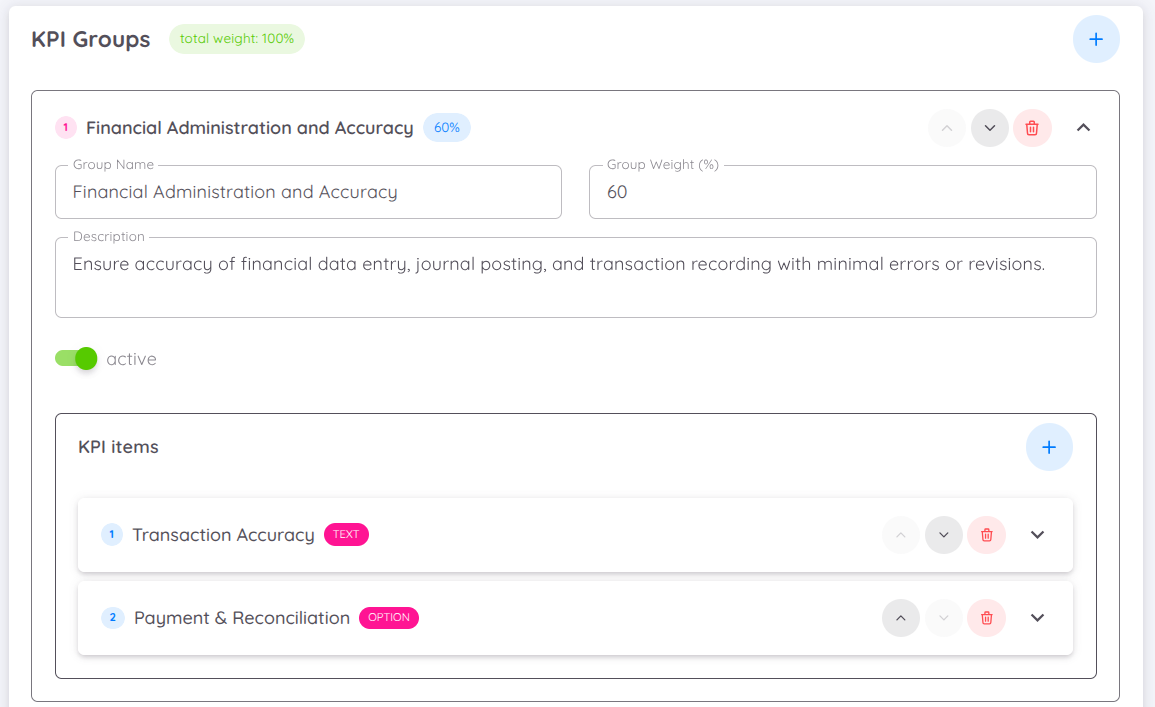
Each KPI group contains multiple KPI items, which represent specific measurable or assessable performance indicators.
KPI Item Fields
Each KPI item includes the following attributes:
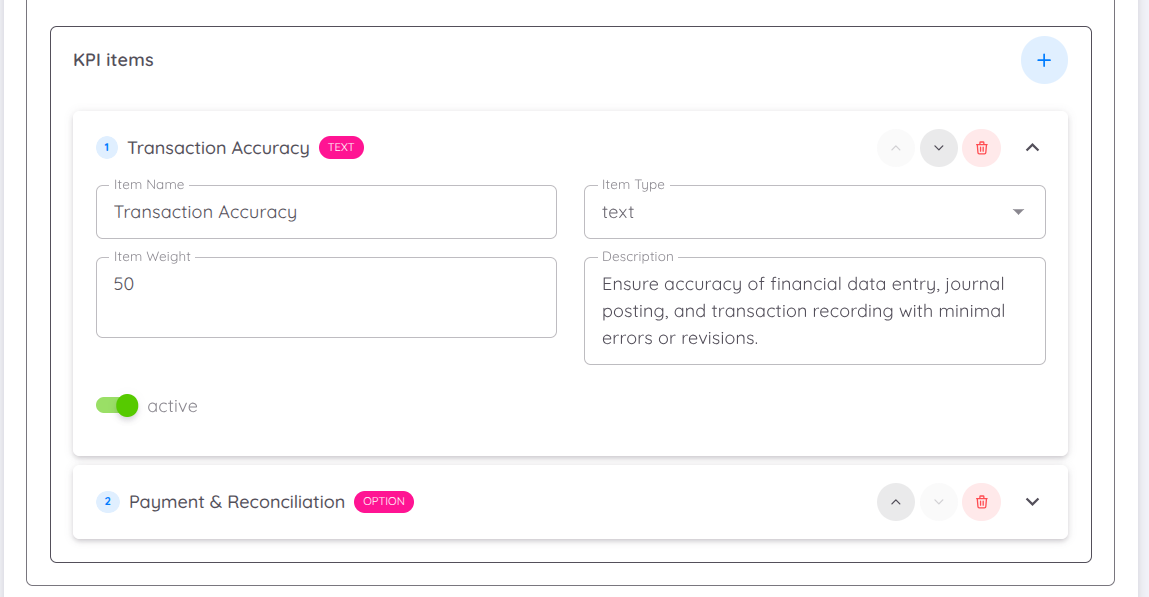
Item Name
The title of the KPI item. This describes what is being evaluated.Example: Sales, Task Completion, Work Accuracy, Report Submission Timeliness
Item Type
Defines how the KPI is measured or evaluated. This field does not directly affect the scoring logic, but serves as a reference for how the performance is assessed and documented.
The available KPI Item Types are:
| Type | Description |
|---|---|
| Text | Used for qualitative input or descriptive evaluations. Reviewers can provide comments, notes, or explanations related to the KPI indicator being assessed. |
| Number | Used for numerical measurements, such as the number of completed tasks, submitted reports, or produced units. |
| Percentage | Used for target-based KPIs measured in percentage values, such as 95% attendance or an 80% task completion rate. |
| Rating | Used for evaluations based on a predefined rating scale, typically ranging from 1 to 5 and represented by star ratings. Scores are generally assigned based on the reviewer's assessment and supported by relevant evidence or documentation. |
| Option | Used when KPI performance is evaluated based on predefined options or categories, such as "Achieved / Not Achieved" or "Excellent / Good / Fair / Poor". |
Weight (Bobot)
Indicates the importance of the KPI item within its group.- A higher weight means the item has a greater impact on the group score.
- Weights are flexible within the group and do not need to sum to 100% individually.
Description
Provides additional details to help reviewers clearly understand what is being measured, including expectations, standards, or evaluation guidelines.
In addition, reviewers may attach supporting documents or evidence for each KPI item to validate the evaluation result. These attachments serve as objective proof of performance and may include reports, screenshots, records, or other relevant documentation that supports the scoring or assessment decision.
Summary of Weight Structure
- KPI Group weights must total 100% across the template.
- KPI Item weights are relative within each group and do not need to total 100%.
- This structure ensures:
- Balanced evaluation across departments
- Flexibility within each evaluation category
- Clear distribution of performance priorities
KPI Scoring & Simulation
The KPI scoring mechanism follows the overall performance evaluation framework, where each KPI item is assessed based on its defined type, target, and weight. The final KPI score is then calculated by aggregating all KPI item results according to their respective weights within groups and the overall KPI template structure.
This ensures that performance results are consistent, measurable, and aligned with the organization’s evaluation standards.
For KPI scoring and simulation, please refer to the Performance Evaluation process.